Thursday, September 22, 2011

DNA

DNA is short for deoxyribonucleic acid. DNA is what carries the instructions God put into us for what we look like and how our bodies work. Every species of organism has it, except for bacteria. Birds are born with DNA that makes them able to fly. We humans are all different. Some of us are tall, some of us have brown eyes, some of us have curly hair. But humans are generally not born with feathers.

A chromosome is a long strand of DNA wrapped around proteins. A gene is a length of DNA. Our genes are arranged along the chromosome like beads. Each chromosome has many genes. Within a species, a gene for a certain characteristic, such as black hair or blue eyes, is always on the same place on the same chromosome.

Each cell has two copies of each gene, one from each parent. These two same genes are called alleles. The combination of alleles is what makes each individual unique. The number of possible combinations is practically countless, with the thousands of genes in a chromosome.

A cell duplicates its chromosomes, its DNA, before it divides. A DNA is not a single molecule but is, instead, a double one. This gives it the ability to divide and reproduce. DNA is like a twisted zipper, with the bases the interlocking teeth of the zipper.

When DNA is duplicated, the two strands of DNA separate. The zipper unfastens. Enzymes, special proteins that control the speed of chemical reactions in the cell, bring nucleotides, small subunits on the chains of DNA, to the two DNA strands. The nucleotides link up with exposed bases and join together to form new strands attached to the originals. The result is two double strands.

Monday, September 19, 2011

Fertilization


For a flowering plant to reproduce, the male cells (pollen) and the female cells (ovule) have to join together. This is called fertilization. When a grain of pollen lands on the stigma (the sticky part of the carpel, see my last post) it forms into a pollen tube (the tube that transports male cells to the ovule at the bottom of the pistil). The pollen tube goes down into the ovary and enters an ovule through a tiny hole, the microphyle.

A pollen grain contains two male nuclei. These go down the pollen tube and join the contents of the ovule. One forms a zygote, which is the first cell of the new organism. The other creates a layer of tissue called endosperm, These become a seed. The ovary becomes a fruit. The plant no longer needs the rest of its parts and it dies.

Some plants do not need to be pollinated. The bee orchid, for example, attracts a certain type of bee by looking and smelling like a female bee, but if no bees come, its stamens will bend over and transfer pollen to the stigma.

Friday, September 16, 2011

Cell Division

Cells have the ability to divide in order create new cells for growth or repair. The process, cell division, occurs in two stages. The first stage, mitosis, is when the nucleus divides into two parts, which each become a new nucleus. The two nuclei, called daughter nuclei, are identical copies of the original.


The second stage of cell division is called cytokinesis. A dividing line called the cell plate forms. It runs down the middle of the cytoplasm. (Cytoplasm is the gel-like substance inside a cell in which organelles are suspended. And organelles are the small parts inside a plant or animal cell.) New cell walls build up along the cell plate. These separate the new cells.

Wednesday, September 14, 2011


Reproduction is the creation of new life. All living things contain the parts needed for reproduction. In flowers, these produce male and female cells called gametes, which join to create new plants. The many specialized parts of flowers include petals, stamens (the male parts of the plants), and one or more carpels (the female parts). In most flowers, the petals are arranged around the reproductive organs. Before a plant blooms, it produces a bud, which eventually develops into a flower. It grows from the receptacle, which is the extended stalk tip. The buds are surrounded by the leaf-like sepals.

A flower's male reproductive parts are stamens. A stamen is made of an anther, a pod-like structure which contains pollen sacks, at the end of a stalk called a filament. When an anther opens, it releases grains of pollen, male reproductive cells. A female's reproductive part is the carpel or pistil. It is made up of the stigma, the top part, which has a sticky surface for pollen to stick to, the style, and the ovaries, each of which holds one or more tiny eggs. The tiny eggs are the female reproductive cells, which develop into seeds after they are fertilized.

Some flowers, like buttercups, have several carpels, while others, like poppies, have only one. Flowers that have male and female parts are described as hermaphrodite. Some plants have two types of flowers - pistillate flowers, which are female, and staminate flowers, which are male. These are called monoecious plants. Other plants, like holly, have only male or female flowers on them and require another plant for fertilization. These are dioecious plants.

Monday, September 12, 2011

Death in YOUR Garden!!!!

If you don't look at the flowers and plants in your yard a little differently after you read this, let me know. Just wonder about how many of your favorite flowers are fatally poisonous... I strongly advise you don't decide to find out how accurate this post is by locating these plants and testing them. I would hate to hear that one of my readers had to visit the emergency room.

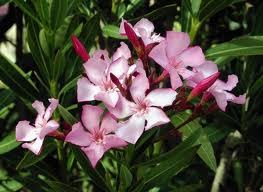
Oleander


Nerium oleander

Evergreen which grows from two to six feet high, with large clusters of red, pinkish or white flowers. This plant is extremely poisonous. Even the smoke from burning it is toxic. A single leaf can kill a human. It grows native in the Mediterranean region to Japan. It is often grown as a houseplant or patio tree in more temperate areas of North America.

Sweet pea


Lathyrus odoratus and other related species

Climbing vine with clustered, fragrant flowers in a variety of colors. Grows to 1-2 meters (about six feet six inches). If eaten in large quantities, it can be deadly. It grows in many gardens across North America.

Nutmeg


Myristica fragrans

Brown, spicy seed or brown powder. Harmless in small amounts, but more than 10 grams or 0.4 oz can cause acute poisoning or death.

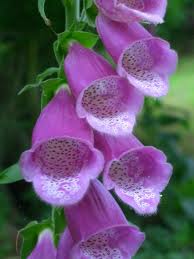
Purple foxglove


Digitalis purpurea

Biennial with tall flowering stalks. Has such nicknames as witch's gloves and dead man's bells. A nibble of a leaf on an upper stalk is enough to possibly cause death. However, it is also used to treat the heart.

Daphnes


Daphne mezereum

Deciduous shrub with purple or white flowers appearing in the spring. Scarlet or occasionally yellow berry-like fruits. The berries may be fatally poisonous, even if only a few are consumed.

Tuesday, April 26, 2011

Herbs


Pennyroyal


A plant from the mint family. A small branched annual, grows from six to eight inches high. Smells similar to spearmint when crushed and is a popular tea. The essential oil is used in aromatherapy - never drink the oil. Even when taken in small doses, it results in death. An infusion, or tea, is safe to drink. The tea helps cure headaches, colds, fever, and nausea. It also settles the stomach. When the leaves are crushed and rubbed onto the skin, they repel insects.


Yarrow


Grows 10 to 20 inches high. Blooms in summer. The flowers resemble tiny daisies and are usually white, although some are pink or red. Legend has it that it is named after Achilles, the greatest warrior of all time in Greek mythology. He is said to have used it to treat the wounds of his men. Is a very useful plant. Can be used to treat colds, flu, chicken pox, and cramps. Also is good for treating wounds.


Camomile


Resembles a daisy. Is a popular tea. Is good for the digestive system. Recommended for allergenic reactions. Aids the digestive system. Can be used to treat colds, upset stomachs, bruises, rashes, and fevers.


Peppermint


Makes popular teas and is commonly used for flavoring. Very good for treating headaches. Has a calming effect. Good for treating nausea, colds, fevers, influenza, colic, and vomiting.

Thursday, April 21, 2011