Monday, January 30, 2012

Metallic Bonding


Metals do not form ionic bonds with each other. An aluminum atom, for example, has three valence electrons. It cannot form a bond with another aluminum atom. If one aluminum atom gives up its three valence electrons to another atom, it would have six valence electrons and not be stable. If an aluminum atom gave up its three valence electrons to two other atoms, there would still not be enough electrons to make them stable. Metals also do not form covalent bonds. Metals usually only have one two or three valence electrons with which to make the atoms stable.

How, then, do metals form bonds? The best theory so far seems to be the free electron theory. According to this theory, thousands of atoms join together. The electrons of these atoms move around freely to form stable atoms. This theory is called metallic bonding. It also explains why metals conduct electricity so well. The free movement of the electrons is what helps conduct electricity and give metal its shiny appearance.

Wednesday, January 25, 2012

Bonding


There are two types of bonding in atoms - ionic and covalent.

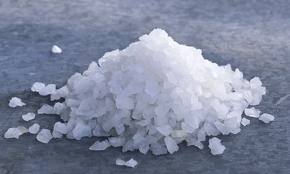
Ionic bonds are when two elements join and exchange electrons. They usually form when a metal and a nonmetal bind together. Ionic bonds are responsible for salt, a mixture of chlorine and sodium, or copper fluoride. Ionic bonds tend to form crystals. They have high melting points. They are hard and brittle, dissolving in water, and conduct electricity when dissolved. Ionic bonds prefer to have eight valence electrons, to satisfy the octet rule. The octet rule states that atoms want to have eight valence electrons. When they do, they are at their most stable. Ionic bonds are like Lego sculptures. If you hit them, your hand will just bounce off because they're tightly packed. Your hand might also hurt, too, depending on how hard you hit it.


Covalent compounds are different. They are usually formed when two nonmetals bind together. Covalent bonds are different because they share electrons, not exchange them. Covalent compounds are things like carbohydrates, proteins and water. They are strong but flexible. If you hit a covalent compound, it would be less like hitting a Lego sculpture, and more like hitting a ball pit. They have low melting points, compared to ionic compounds, and don't easily dissolve in water.

Wednesday, December 14, 2011

The Periodic Table of the Elements


The Periodic Table of the Elements contains every known element in the universe. It is used by chemists to learn about these atoms. It is made up of tiny squares, each containing a certain element. The boxes are various colors as well. Blue indicates a gas when in its natural state, a yellow square indicates a solid when in its natural state, orange identify liquids when in their natural state, and green show that the element has been discovered by man in a laboratory. Inside each square is a one or two letter abbreviation of the name of the element, the symbol. Most of these abbreviations come from the Latin or Greek names of the elements. Above the symbol for the element is the elements atomic number.


The atomic number indicates the number of protons within the nucelus of a given element. Hydrogen only has one proton, so it's number one on the Periodic Table. Helium has two protons, so it is number two, and so on. The number that appears below the symbol is the elements atomic mass number. Protons and Neutrons are each both about one atomic mass unit. Neutrons have no electrical charge, so they don't affect the electrical balance of an atom, and there can be varying numbers of them. Each one of these with a varying number of neutrons is called an isotope.

Tuesday, December 6, 2011

Ionic Bonds


There are three sorts of changes in matter - nuclear, physical, and chemical. Nuclear changes occur in the nucleus, or center, of atoms. Physical changes occur when a substance undergoes change, but retains its chemical composition. When chemical changes occur, there is an actual chemical change in the substance. The original atoms remain, but a new substance is created, with a different chemical composition. This is how items such as plastic are created. The substances used to make it cannot be separated, which is what distinguishes between these and mixtures, such as muddy water. If given enough time, mud and water will separate. In a compound, however, the valence electrons (the electrons in the outer energy level) are lost, gained, or shared between the different elements to create unique substances. They are held together by bonds, either ionic or covalent. I'll talk about ionic bonds today.

If an atom looses a negatively charged electron, it becomes a positive ion, because it has more positively charged protons than negatively charged electrons. If the opposite happens, and the atom looses a positively charged proton, it becomes a negatively charged ion. A positive ion and a negative ion will attract. Sodium has only one valence electron. Chlorine is an atom that is missing only one electron in order to become stable. If both come close together, the sodium's valence electron will join the chlorine atom, completing an ionic bond and forming sodium chloride, or table salt. This sort of bond is common in chemistry and has given rise to the Octet rule, which states that atoms tend to gain, loose, or share electrons in order to acquire a full set of valence electrons.

Ionic bonds share similar properties, which include high melting points, a tendency to be brittle, and dissolve in water.

Friday, November 18, 2011

In case anyone's wondering where my sudden interest in poisonous plants came from, it's because I read The Sweetness at the Bottom of the Pie, by Alan Bradley. And no, I have NOT been researching poison so I can actually USE it. Just in case this wasn't obvious, I don't recommend testing these plants to see if I'm right. (Though I'm sure none of you were thinking about it... were you?)

Aconite


Aconitium napellus

This blue flower is deadly. It has a poison similar to that of larkspurs and delphiniums (which, in big enough doses, can also kill you, although I don't think it's as deadly as aconite). It can be found growing throughout Europe and the United States. It is also known as monkshood, the name coming from the appearance of the sepal, which resembles a hood or helmet. The Nazis added aconite to their bullets to make them extra deadly.


Bleeding Heart


Dicentra spp.

This attractive flower resembles a heart with a drop of blood suspended from it. It contains alkaloid toxins similar to those of the poppy family. The alkaloid can cause seizures, nausea, and respiratory problems.


Lily-of-the-Valley


Convallaria majalis

All parts of this flower are poisonous, the bulbs in particular. It contains various cardiac glycosides and, when consumed, provides a reaction similar to that of foxgloves (which I discussed in my last post). Both plants have been used to treat heart conditions. Lily-of-the-Valley can lead to headaches, nausea, and even heart failure.


Deadly Nightshade


Atropa belladonna

Due to the name, "Deadly Nightshade", do I really need to tell you that this plant isn't something you want to put in your mouth? This plant can cause hallucinations and headaches, among others things (which include killing you.) The black berries, however, are very attractive. Rabbits and cattle can eat them with no side effects. However, this does not extend to humans. (Which goes to show you that, when stranded on a deserted island, watching what the animals eat will not help you much.) The name Atropa has an interesting route. The three Fates of Greek Mythology each had a role. Lachesis measured the thread of destiny at birth. Clotho spun the thread, controlling their destiny. Atropos chose the time and manner of death.

Thursday, October 6, 2011


When does life begin?

Science has been able to prove that life starts at conception. As soon as an egg has been fertilized, it is one cell. But that cell has all the genetic information and potential to become a human being just like you or me. At 30 weeks, a baby can possibly recognize voices outside the womb and feel pain.

At 26 weeks, the eyes are partially open and the baby blinks often. It also feels pain. At 21 weeks, if the baby is born, it has a good chance of survival. At 20 weeks, hair is present. At 16 weeks, the baby's fingerprint is fully formed. At 14 weeks, the baby can move its arms, legs, lips, head, mouth, wrist, toes and feet. And it is thought that, even then, the baby feels pain. At 10 weeks, the baby's brain is growing quickly and it has sockets for all its teeth. At 18 days, the baby's heart is developing and its eyes are forming.

If you look in a recent medical dictionary, you'll read that life begins at implanation. However, if you ask a scientist, they will reply that it begins at conception. Why is this? So they can sell "morning after" pills. The owner of Oregon's largest abortion clinic, testifying under oath, said "Of course human life begins at conception". And this is a woman who runs an abortion clinic!

What does the Bible have to say about abortion? "Thus saith the Lord that made thee, and formed thee from the womb", Isaiah 44:2. God forms every child in the womb. Every human is "fearfully and wonderfully made" in God's image. We are not just another animal. The unborn human beings suffer horrible deaths we would wish on no one, yet condone for the murder of babies. And they feel that pain.

Once, a baby was removed from its mother's womb and left on a tray to die with no further ado. The abortion was performed at a certain part of the baby's development when it could survive outside the womb. The baby's screams were so awful that a nurse at the clinic eventually couldn't take them anymore, wrapped the baby in a blanket and took it home. The baby lived.

Those of us who have heard the Christmas story know that Herod killed all the babies two and under to keep himself in power. This was a horrible thing to do. But it's nothing compared to the murder of unborn children. Ever since abortion was legalized, over forty million babies have been legally murdered. Mary O'Bryan Drum said, "After a woman is pregnant, she cannot choose whether or not she wishes to become a mother. She already is... all that is left to decide is whether she will deliver her baby dead or alive."

We are turning a blind eye to the murder of children, all of whom had a plan, fearfully and wonderfully made in the image of God. We need to turn a seeing eye to it and stand up against it.

Monday, October 3, 2011

With genetic testing, it is now possible to determine many things about a baby before it born. It is routine to run a genetic test in order to ensure that a baby is healthy and normal. If the baby will not be "normal" the parents are given the choice not to continue the pregnancy (which could also be translated as "have an abortion".) Some people consider it wrong to bring into the world a child who will not be "normal". For many people with inherited disabilities, the idea of testing for disabilities is offensive. To them, it means they are not special human beings like everyone.

In the book and movie My Sister's Keeper, two parents have a "designer baby" genetically created to be a blood/organ donor for her sister with cancer (which could also be translated to "spare parts".) Nowadays, families with genetic diseases can arrange to have such a baby. The DNA of each fertilized egg is examined for the defect that passes on the disease. When one is found without the defect, it is placed in the womb.

However, not every such baby is created because of a genetic defect. Some, like the one in My Sister's Keeper, are designed with a certain blood type. Some are created to have certain characteristics, such as black hair or blue eyes. Perhaps the parents wanted a boy or girl. It is becoming easier and cheaper to have a "designer baby", and it causes young couples to make difficult decisions.