Showing posts with label Chemistry. Show all posts

Thursday, February 9, 2012


Energy plays an important role in chemical reactions. A chemical reaction that stores energy is called an endothermic reaction. In photosynthesis, solar energy is stored in the sugar molecules. Most endothermic reactions store energy in the form of heat. Another endothermic reaction is putting a chemical ice pack on an injury. The chemicals inside are stored separately, but when mixed feel cool against the skin.


Exothermic reactions are the opposite of endothermic. These release energy. Burning something is an exothermic reaction. So is the reaction that digests your food. As food molecules are broken down, energy is released that the body uses to function.

Wednesday, February 8, 2012

Catalysts


A catalyst is something added to a chemical reaction in order to speed it up. The reactants have to reach a certain energy level before they can react, and a catalyst can speed up the process. It reduces the amount of energy needed for the reaction. For example, chlorophyll is a catalyst that speeds up photosynthesis. Enzymes are also catalysts, found in living cells. They are used in reactions that are involved in digestion, cell construction and reproduction. If we did not have enzymes, we would be unable to produce glucose at the speed our body needs it, so these are essential to life.


What do you add if you want to slow a reaction down? You use a negative catalyst. If a chemical reaction, such as food spoiling, is occurring, it can be slowed down, by things like fruit freshener. Negative catalysts, or inhibitors, help keep the reactants apart, or bond with other reactants so the reaction will not take place.

Monday, February 6, 2012

Reacting

Chemical reactions occur when two or more elements combine and form a new substance or when a substance is broken down into its seperate elements. Chemical reactions are everywhere. Bread rising is a chemical reaction. Fireworks going off is a chemical reaction. Fire burning is (well, I suppose you've already guessed this) a chemical reaction.

Reactions often change heat. An exothermic reaction, for example, is one where the product is hotter than what went into it. If the product is cooler than its reactants, then its called an enothermic reaction. There are many different sorts of chemical reactions. If an element combines with oxygen, the reaction is an oxidation reaction. If oxygen is removed from a substance, it is called a reduction reaction. If elements other than oxygen combine, then the substance formed is called a composition reaction. If a substance is broken down, it's called a decomposition reaction. Some reactions, like rust, occur very slowly. Others happen quickly, like fireworks.

In order for a reaction to take place, the reactants must all be in contact with each other. The size also matters. A cube of iron will rust more slowly than a sheet with the same amount of material, because the thin sheet has more surface area and the oxygen in the air can react with more iron particles. The concentration of the reactants also speeds up the reaction. The more molecules of each reactant, the more likely they are to come in contact and react. Heat can also increase the speed of the reaction, because it causes the heat causes the molecules to move more quickly. Adding a catalyst can also help. A catalyst speeds up the reaction, but is not used up.

Monday, January 30, 2012

Metallic Bonding


Metals do not form ionic bonds with each other. An aluminum atom, for example, has three valence electrons. It cannot form a bond with another aluminum atom. If one aluminum atom gives up its three valence electrons to another atom, it would have six valence electrons and not be stable. If an aluminum atom gave up its three valence electrons to two other atoms, there would still not be enough electrons to make them stable. Metals also do not form covalent bonds. Metals usually only have one two or three valence electrons with which to make the atoms stable.

How, then, do metals form bonds? The best theory so far seems to be the free electron theory. According to this theory, thousands of atoms join together. The electrons of these atoms move around freely to form stable atoms. This theory is called metallic bonding. It also explains why metals conduct electricity so well. The free movement of the electrons is what helps conduct electricity and give metal its shiny appearance.

Wednesday, January 25, 2012

Bonding


There are two types of bonding in atoms - ionic and covalent.

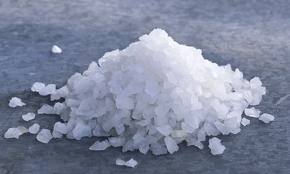
Ionic bonds are when two elements join and exchange electrons. They usually form when a metal and a nonmetal bind together. Ionic bonds are responsible for salt, a mixture of chlorine and sodium, or copper fluoride. Ionic bonds tend to form crystals. They have high melting points. They are hard and brittle, dissolving in water, and conduct electricity when dissolved. Ionic bonds prefer to have eight valence electrons, to satisfy the octet rule. The octet rule states that atoms want to have eight valence electrons. When they do, they are at their most stable. Ionic bonds are like Lego sculptures. If you hit them, your hand will just bounce off because they're tightly packed. Your hand might also hurt, too, depending on how hard you hit it.


Covalent compounds are different. They are usually formed when two nonmetals bind together. Covalent bonds are different because they share electrons, not exchange them. Covalent compounds are things like carbohydrates, proteins and water. They are strong but flexible. If you hit a covalent compound, it would be less like hitting a Lego sculpture, and more like hitting a ball pit. They have low melting points, compared to ionic compounds, and don't easily dissolve in water.

Tuesday, December 6, 2011

Ionic Bonds


There are three sorts of changes in matter - nuclear, physical, and chemical. Nuclear changes occur in the nucleus, or center, of atoms. Physical changes occur when a substance undergoes change, but retains its chemical composition. When chemical changes occur, there is an actual chemical change in the substance. The original atoms remain, but a new substance is created, with a different chemical composition. This is how items such as plastic are created. The substances used to make it cannot be separated, which is what distinguishes between these and mixtures, such as muddy water. If given enough time, mud and water will separate. In a compound, however, the valence electrons (the electrons in the outer energy level) are lost, gained, or shared between the different elements to create unique substances. They are held together by bonds, either ionic or covalent. I'll talk about ionic bonds today.

If an atom looses a negatively charged electron, it becomes a positive ion, because it has more positively charged protons than negatively charged electrons. If the opposite happens, and the atom looses a positively charged proton, it becomes a negatively charged ion. A positive ion and a negative ion will attract. Sodium has only one valence electron. Chlorine is an atom that is missing only one electron in order to become stable. If both come close together, the sodium's valence electron will join the chlorine atom, completing an ionic bond and forming sodium chloride, or table salt. This sort of bond is common in chemistry and has given rise to the Octet rule, which states that atoms tend to gain, loose, or share electrons in order to acquire a full set of valence electrons.

Ionic bonds share similar properties, which include high melting points, a tendency to be brittle, and dissolve in water.

Friday, December 18, 2009

Facts 4 the Day

Here's something for all you tea lovers to chew on,( or should I say sip on?)
Tea has a different taste when prepared with cold water instead of hot, due to the amount of oxygen in both. Also, if you add tea to milk, the flavor will be different
because a chemical in the milk called casein will break down less than if you add milk to tea.
If you don't like tea, here's something for you to think about. ( Let's hope you don't spend any sleepless nights pondering over it, wondering how much you actually know about your world. OK, maybe I'm exaggerating just a tiny bit. But just a little. I hope.)
There is a planet between Mars and Jupiter called Ceres. Actually, it's a dwarf planet. It used to just be considered an asteriod. And there's a planet after Pluto called Eris. Inside Neptune, it could also very possibly rain diamonds. I'm not making this up.
If you like these facts, come tomorrow. I'll post more if I can. Who knows, you might find out how to get an egg inside a bottle!